Web Developer or Web Design Agency in Malta: Which Do You Actually Need?
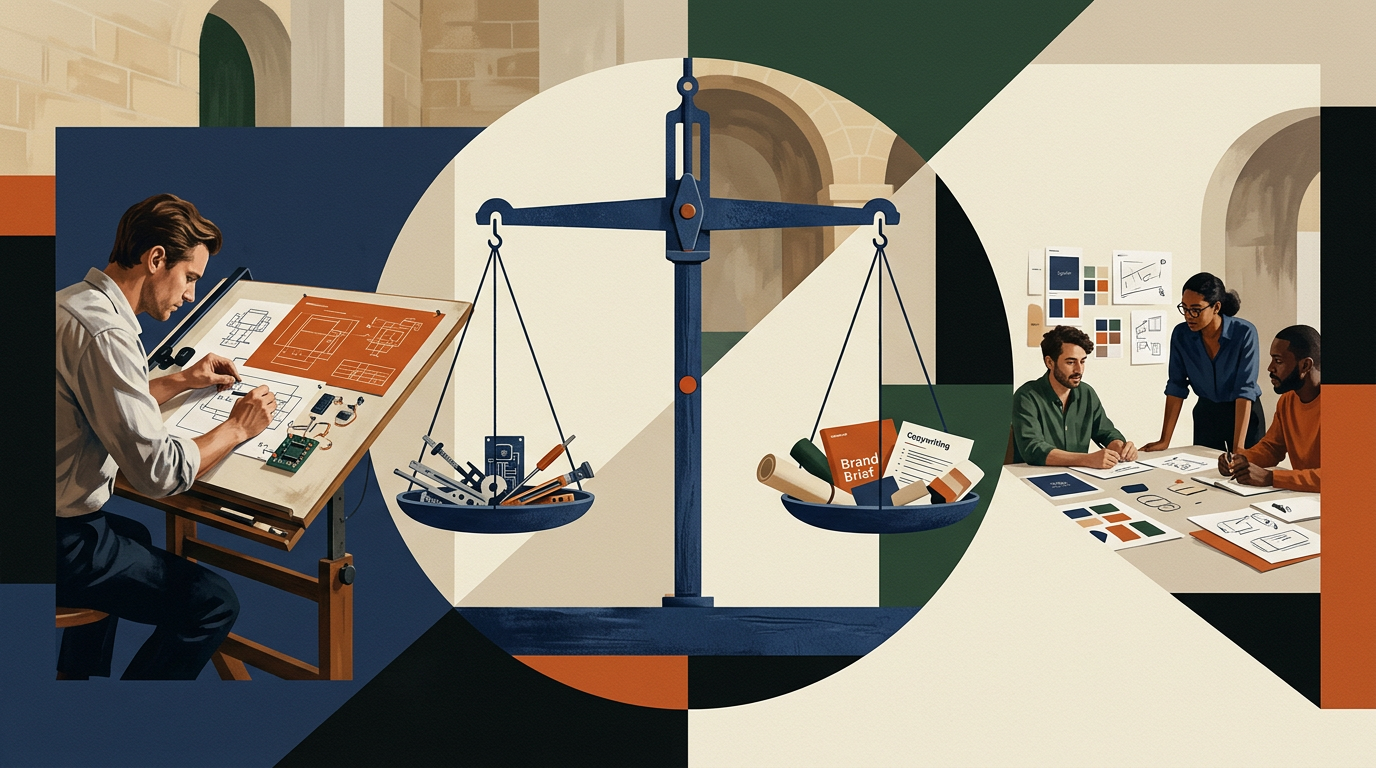
If you need a new website, a rebuild, or substantial changes to an existing site, one of the first questions coming up is usually who should do the work. If you do not have suitable in-house staff, you might think of a freelance web developer, a web designer, a digital agency, or a branding agency with a development team? There is no universally better option. They solve overlapping, but not identical, problems. One of the most important clues for who you actually need is where the uncertainty on your part lies.
Do you already know what your business stands for, what you want the website to achieve, and roughly how it should communicate that? Or are those questions themselves part of the project? Do you need someone to turn a reasonably clear vision into a fast, maintainable and measurable website? Or do you need a team to help define the brand, visual language and message before anyone starts building?
When a web developer is a good fit
A developer-led project makes sense when much of the direction already exists and the main challenge is turning it into a good working website.
For example, you may already have:
- an established brand and visual identity;
- a marketing person or management team with a clear view of the business;
- existing content that needs restructuring rather than reinventing;
- a website that broadly looks right but performs badly;
- technical requirements beyond a conventional brochure website;
- existing systems that need to be connected;
- SEO, analytics or performance problems that need technical work.
In these situations, adding a large creative team may not solve the problem.
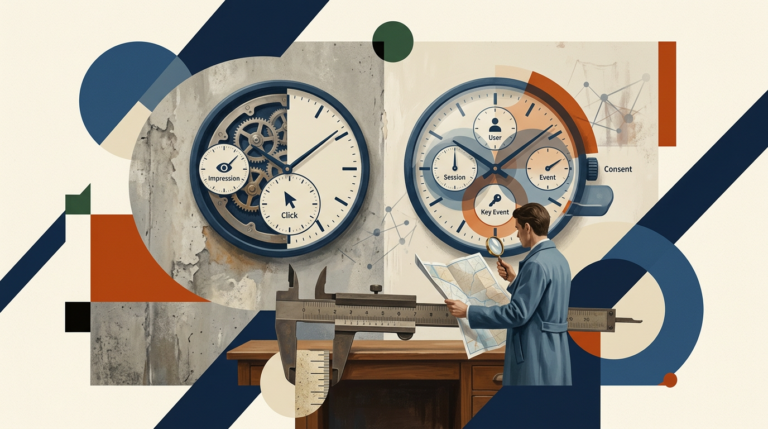
You may simply need someone who can understand what the business is trying to accomplish and take technical responsibility for getting there. That can include the visible website, but also the less obvious parts underneath it: information architecture, technology implementation, custom functionality, API integrations, performance, analytics, consent management, structured data, technical SEO and maintainability. This is where an experienced independent developer can be a particularly useful partner.
A clear vision makes the freelancer model work especially well
There is another context where working directly with a developer tends to work well: your company already has a strong voice of its own. That voice and vision does not have to come from a formal brand department, but from a founder who understands the company extremely well. It could also come from an experienced marketing manager. That voice might already exist in your sales material, product, existing visual identity and customer communication, without you having formalized it. It’s just there as a result of your business development efforts.
In that case, you often do not need an external team to invent the company for you. You need someone who can listen, challenge assumptions where necessary and translate that existing direction into a functioning digital product.
The collaboration can be very direct: business knowledge from your side + technical and web experience from mine. That is quite different from asking a designer or agency to discover what the company should look and sound like in the first place.
When an agency is probably the better choice
There are also projects where an agency genuinely makes more sense. If you are starting from somewhere like:
We know the business needs to change, but we are not quite sure how we should position ourselves, what the new brand should feel like or even how we should talk about what we do.
then development probably isn’t the first problem to solve.
A good creative or digital agency can bring together disciplines such as:
- brand strategy;
- visual identity;
- art direction;
- UX research;
- copywriting;
- photography or video;
- workshops and stakeholder facilitation;
- campaign strategy;
- design;
- development.
If the website is part of a much larger rebranding exercise, a breadth of different experts who have a reliable process to work with each other and together with clients can be extremely useful.
Likewise, larger organisations may need an agency simply because of organisational complexity. If a project involves several departments, executives, compliance teams, external suppliers and repeated approval rounds, project management becomes a substantial part of the work.
That is not pointless agency overhead. It is part of delivering the project.
Development-led does not automatically mean freelancer-led
It is worth making another distinction. A project can be highly technical without an independent developer necessarily being the best supplier. A complex platform with a short deadline might need several developers working in parallel. A larger organisation can need guaranteed cover, formal service agreements or specialised people for security, infrastructure, frontend and backend work. A technically strong agency or development team can therefore be the right answer even when branding plays almost no role.
What about design?
There is an awkward gap between software development and traditional design that many business websites fall into. Most companies do not need an experimental piece of digital art. They need a site that looks deliberate, professional and appropriate for their market. Sure, it needs good typography, spacing, hierarchy, responsive behaviour, sensible components and a user interface that does not get in the way.
A developer with good design judgment can often handle that perfectly well. That is different from claiming that a developer replaces a specialist brand designer. If you need a completely new visual identity, original art direction, a sophisticated design system or a website where visual originality is itself an important part of the product, I would rather involve a specialist designer than pretend those are the same disciplines as the ones I master.
For many established SMEs, though, the requirement is somewhere in the middle: We already know who we are. Please make the website look good, work properly and stop being difficult to maintain. And that is a very reasonable developer-led project.
The real advantage of working directly with a developer
The strongest argument for an independent developer is not simply that freelancers are cheaper. Sometimes they are. Sometimes they aren’t. The more important difference is direct responsibility.
When you explain a problem to me, the person listening is also the person who will inspect the website, decide how to approach it and write or change the code. There is no mandatory chain of: client → account manager → project manager → technical team.
For the right kind of project, that can make communication considerably easier. Technical constraints can be discussed while decisions are being made rather than discovered several meetings later.
And when something unusual happens, you can talk directly to the person who actually understands the implementation, because he did it.
But yes: working with one person has a downside
There is also an obvious trade-off which is worth stating plainly. An agency has redundancy, that I cannot provide. If one employee is unavailable, the agency can usually assign somebody else. A single freelancer has greater key-person dependency. That”s important, particularly for critical systems or organisations that require guaranteed support coverage.
My answer to that risk is not that you should become dependent on me. It is the opposite. Where possible, the website should remain understandable and transferable to another competent developer. That means avoiding unnecessary proprietary systems and making sure ownership stays where it belongs: with you.
Depending on the project, that includes things such as:
- your company owning its domain and hosting accounts;
- your company controlling important third-party services;
- using established technologies rather than an obscure proprietary CMS;
- keeping custom development understandable and maintainable;
- documenting unusual integrations or infrastructure;
- using version control where appropriate;
- providing a usable handover rather than locking the client into an undocumented setup.
A website is healthier if changing supplier is inconvenient rather than catastrophic.
Is an agency more expensive?
Most of the time yes, but there is a reason. With an agency you may be paying for a strategist, designer, account manager, project manager, developer and other specialists. If you need those people, that is not wasted money.
The mistake is paying for all of them when your actual problem only requires two of those disciplines. And the reverse mistake is equally possible: hiring one person because the quote is cheaper when the project indeed needs branding, research, professional copy-writing, design and development.
What if the website isn’t generating enquiries or sales?
A website that does not generate business does not automatically have a development problem. The cause might be technical SEO. It could be poor search visibility, weak calls to action or a confusing user journey. But it could equally be positioning, pricing, copy, visual credibility, the offer itself or simply a lack of qualified traffic.
A competent developer should be able to recognise when the problem lies outside development rather than trying to solve everything with another plugin or redesign. The same applies in the other direction: changing colours, typography and imagery will not fix a site where pages take 5 seconds to load, where tracking is broken or architecture makes every change unnecessarily difficult or fragile.
What if you need custom functionality?
A booking workflow, customer portal, property directory, member area, product configurator, custom checkout or internal dashboard may appear inside a website, but the underlying work is increasingly software development rather than page design.
Instead of primarily asking how the page should look, one needs to think about:
- data structures;
- permissions;
- integrations;
- application logic;
- APIs;
- maintainability;
- security;
- failure cases;
- performance.
An agency can provide this work, but make sure there is genuine development expertise behind the proposal rather than treating custom software as just another page in the sitemap.
Does being in Malta change anything?
No, not fundamentally. Good web development is good web development wherever the supplier is based. There are, however, some characteristics of Maltese businesses that I encounter reasonably often.
Many companies here have relatively small internal teams while serving customers in several countries. A business can be very local operationally while its customers are in Malta, the UK, Germany, Italy and elsewhere. That can create requirements around multilingual content, international SEO, analytics, CRM integrations or different customer journeys that go beyond a conventional local-business website.
At the same time, a smaller organisation may already have strong commercial knowledge internally without having its own web development team. That is often a good environment for working directly with an external technical partner.
A simple way to decide
If the biggest unanswered questions sound like:
Who are we?
How should this company look?
What should our brand feel like?
How should we position ourselves?
What should our campaigns say?
then speaking to a good creative agency or brand specialist first is probably sensible.
If they sound more like:
How should we structure this website?
Can this integrate with our existing systems?
Why is the current site so slow?
Why is maintaining it so difficult?
How do we improve its search visibility?
How can we measure whether it is working?
Can WordPress actually support this workflow?
then you are dealing much more directly with development.
And if your project needs both, there is no rule saying the work must all come from the same supplier. A good designer and a good developer can work together. So can your existing marketing department and an external developer.
Where I fit
I sit on the development side of this spectrum. I build and rebuild WordPress websites, develop custom functionality and integrations, and work on technical SEO, analytics, tracking and performance.
I care about how a website looks and feels, because those things affect whether people can actually use it. But I am not a branding studio, and I do not think every business needs one.
My best-fit projects tend to be businesses that already have some sense of who they are and what they are trying to accomplish, but need someone who can turn that into a technically sound website: structured properly, maintainable, measurable and capable of doing more than simply looking good.
Sometimes that means building something new. Sometimes it means taking over an existing website that has accumulated years of plugins, workarounds and unexplained problems. And sometimes the most useful thing I can tell a potential client is that the problem they are trying to solve is not primarily a development problem at all.